
How to Move Heavy or Special Items Safely: Pianos, Gym Equipment, Aquariums and Artwork
Moving heavy or special items safely requires the right preparation, protective materials, and handling methods for each item. Pianos, gym equipment, aquariums, and valuable artwork need different moving procedures to reduce the risk of damage, injury, and transportation problems.
Whether you are moving within Dubai, relocating to Abu Dhabi, or arranging a move to Sharjah or another UAE emirate, plan the handling process before moving day. Item dimensions, building access, elevator restrictions, and the local weather can all affect how your belongings should be packed and transported.
Planning a move involving heavy or delicate belongings? Contact Smile Movers to discuss your requirements and request a moving quotation.
Why Heavy and Special Items Need Extra Care
Some belongings are difficult to move because of their weight, unusual shape, delicate components, or sensitivity to impact and environmental conditions. Using the same packing method for every item can increase the risk of damage.
For example, a piano has a delicate internal mechanism, gym machines contain moving parts and sometimes electrical components, aquariums require separate arrangements for the tank and aquatic life, and artwork may be vulnerable to scratches, pressure, and unsuitable packing materials.
Before moving these items, complete a basic assessment:
- Measure the item and check doorways, corridors, staircases, and elevators.
- Identify which components can be safely removed or secured.
- Choose suitable protective materials and lifting equipment.
- Confirm building access, parking, and any required moving approvals.
- Decide whether specialist handling is necessary.
Avoid attempting to lift exceptionally heavy or awkward items without suitable equipment and trained assistance. A clear plan helps protect both your belongings and the people handling them.
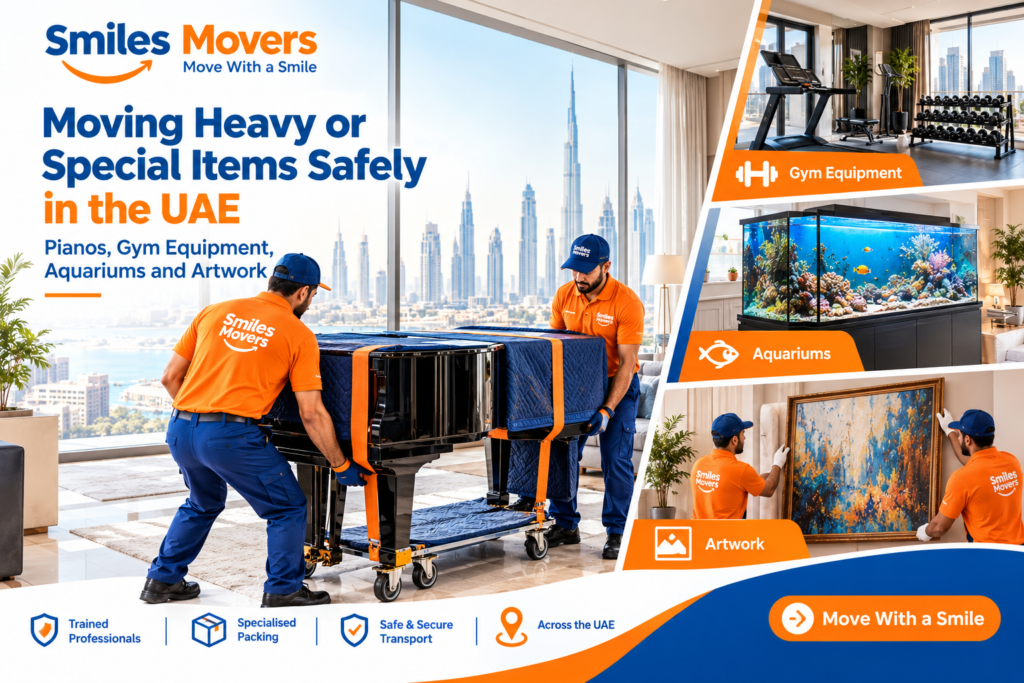
How to Move a Piano Safely
Pianos are heavy instruments with sensitive internal components and finished surfaces. Their weight distribution makes them difficult to control through narrow doorways, staircases, and building entrances.
Prepare and Protect the Piano
Remove sheet music, accessories, and other loose items before preparing the instrument. Secure the keyboard lid if the piano design allows it, and protect the exterior with suitable padded covers or moving blankets. Avoid applying adhesive directly to the piano’s finish. Keep the instrument in its intended upright transportation position unless a qualified specialist specifies another procedure.
Never drag a piano or lift it by its legs. These parts may not be designed to support the instrument’s full weight during relocation.
Use Appropriate Piano-Moving Equipment
Depending on the piano’s size and the access route, the move may require a heavy-duty piano dolly, lifting straps, protective padding, and a trained team. Grand pianos can require partial dismantling and specialist support. Even upright pianos may be difficult to manoeuvre safely on ramps or uneven surfaces.
Before moving the instrument, check whether it can pass through every doorway and elevator without tilting or forcing it into a restricted space. Professional piano movers may be appropriate for large, valuable, or difficult-to-access instruments.
Secure the Piano During Transport
The piano must be secured inside the moving vehicle to limit movement during braking and turning. Keep other belongings from pressing against its finish or exposed components.
After delivery, allow the instrument to adjust to its new environment before arranging tuning if needed. Temperature and humidity changes can affect tuning stability, so a qualified piano technician can advise on the appropriate timing.
How to Move Gym Equipment Safely
Treadmills, exercise bikes, elliptical trainers, weight benches, and multi-gym systems can be heavy and difficult to manoeuvre. Some also contain electrical connections, moving mechanisms, and detachable components.
Follow the Manufacturer’s Instructions
Consult the user manual before dismantling gym equipment. Remove detachable accessories and secure folding sections according to the manufacturer’s guidance. Disconnect powered equipment from its electrical supply before preparing it for transport. Do not dismantle components beyond the recommended procedure unless a qualified technician is handling the work.
Keep screws, bolts, and fittings in labelled bags. Taking photographs before dismantling can make reassembly easier.
Pack Weights and Electronic Components Separately
Place dumbbells, weight plates, and other metal accessories in suitable containers that can support their combined weight. Use smaller boxes for heavy components rather than creating loads that are difficult to lift safely. Secure loose bars, handles, and attachments so they cannot shift during transport. Protect electronic displays and control panels with appropriate padding, avoiding pressure on screens and buttons.
Reassemble and Check the Equipment
Confirm that the equipment is secured for transportation and that the vehicle can accommodate its dimensions and weight. Large commercial machines may require specialist lifting equipment or professional dismantling and reassembly.
At the destination, check that all components are present and inspect the equipment for visible damage. Follow the manufacturer’s instructions during reassembly, and verify that safety features work correctly before using the machine.
How to Move an Aquarium Safely
Aquariums require separate planning for the tank, its equipment, and the fish or other aquatic animals. Transporting a filled aquarium can place uneven pressure on its glass, seams, and supporting structure.
Arrange Safe Transport for Aquatic Life
Plan how to transport fish before dismantling the aquarium. Use suitable containers designed for aquatic life, taking account of the species, journey duration, temperature requirements, and water conditions. For long journeys, sensitive species, or valuable aquatic collections, consult an aquarium specialist about oxygenation, temperature control, and appropriate transport procedures. Avoid unnecessary handling and sudden environmental changes wherever possible.
Empty and Protect the Tank
Remove the fish and other aquatic life before preparing the tank for transport. The tank itself should be emptied of water, substrate, decorations, and equipment before it is lifted or carried. Once empty, protect the tank with appropriate padding. Keep pressure off the glass and avoid twisting or uneven support, which can damage the structure or seals. Do not place tools or loose items inside the tank, as they may scratch the surfaces.
Set Up the Aquarium at the New Property
Before refilling the aquarium, confirm that its stand is level, stable, and suitable for the tank’s filled weight. Reconnect the necessary equipment and check for visible damage or leaks. Restore suitable water conditions and filtration before returning aquatic animals, following guidance appropriate to their species. If the aquarium is large or the fish are particularly sensitive, specialist assistance can help you plan the transfer.
How to Pack and Transport Artwork Safely
Paintings, framed photographs, sculptures, and decorative artwork can be damaged by impact, abrasion, pressure, or unsuitable packing materials. The correct approach depends on the item’s surface, frame, materials, and condition.
Choose Suitable Packing Materials
Assess each piece before packing it. Depending on the artwork, suitable materials may include acid-free tissue, glassine, protective corner guards, cushioning, and purpose-designed picture or mirror boxes. Avoid applying adhesive tape directly to artwork, painted surfaces, or delicate frames. Do not place plastic directly against sensitive painted surfaces when it could trap moisture or affect the finish. Oil paintings, antique pieces, and unusually delicate works may require advice from a professional art handler to determine the appropriate surface protection.
Protect Frames, Glass, and Sculptures
Use corner protection and a sturdy box suited to the dimensions of framed artwork. Select any glazing protection carefully to avoid putting pressure on the frame or the artwork beneath it. For sculptures and irregularly shaped objects, use cushioning that supports the item’s shape without pressing against fragile projections. Valuable or unusually fragile pieces may need custom crating.
Load Artwork Carefully
Label packages clearly and communicate any special handling requirements to the moving team. Where appropriate for the artwork and its packaging, carry framed pieces vertically on their edge rather than placing them flat beneath other belongings. Secure packages to prevent sliding or tipping during transport. Keep artwork away from heavy items and protect sensitive pieces from excessive heat, moisture, and direct sunlight. For valuable collections, confirm the moving company’s handling procedures and clarify applicable damage coverage before booking.
Important Moving Requirements in Dubai and the UAE
Moving heavy or special items involves more than packing. The properties at both ends of the journey can affect the moving schedule and the equipment required.
Check Building Permits, NOCs, and Elevator Bookings
Before moving from or into an apartment or residential building in Dubai, contact the relevant building management or community operator. Ask whether a move-in or move-out permit, building NOC, security approval, or supporting documents are required. Requirements vary by property, so confirm the current procedure rather than assuming every building follows the same rules.
If you are moving a piano, large aquarium, or bulky gym machine, reserve the service elevator and loading area in advance where required. Check the elevator’s dimensions and weight capacity, permitted moving hours, and any requirements for protective coverings. If an item cannot fit safely through the available entrance or elevator, discuss an approved alternative with building management and your moving company before moving day.
Plan for Access and UAE Weather
For apartments, check service access, corridor widths, loading bays, and vehicle restrictions. For villas and townhouses, consider steps, driveway access, entrance dimensions, and the distance to the loading area. High temperatures can also affect sensitive belongings. Avoid leaving artwork, musical instruments, electronics, or other temperature-sensitive items in a parked vehicle for extended periods. Aquatic life requires particular attention to suitable transport conditions. If you are moving between Dubai, Abu Dhabi, Sharjah, or another emirate, discuss the journey length and any special handling requirements with your moving provider.
Confirm the Quotation and Service Inclusions
Before confirming your booking, request a clear quotation that explains what is included. Depending on the item, you may need to confirm:
- Specialist packing materials or custom crates.
- Dismantling and reassembly.
- Heavy lifting equipment and trained handlers.
- Transportation arrangements for fragile or sensitive belongings.
- Applicable insurance or damage-coverage terms and exclusions.
Providing photographs, measurements, the collection and delivery locations, and details about stairs or elevators can help the company assess the job more accurately.
When Should You Hire Specialist Movers?
Consider professional assistance when an item is exceptionally heavy, mechanically delicate, valuable, or hard to access.
Specialist support may be appropriate for:
- Grand pianos and other large musical instruments.
- Commercial gym machines and heavy weight systems.
- Large aquariums or sensitive aquatic collections.
- Valuable paintings, sculptures, antiques, and framed artwork.
- Items that cannot pass safely through standard doors or elevators.
When comparing moving companies in Dubai, Abu Dhabi, or elsewhere in the UAE, ask about their experience with the specific item, available equipment, handling procedures, and transportation arrangements. Do not assume that every general moving service includes specialist packing or dismantling.
Choose a provider based on the requirements of your move, and confirm all agreed services and coverage in writing before moving day.
Frequently Asked Questions
How do you move heavy or special items safely in the UAE?
Start by checking the item’s dimensions, weight, condition, and handling requirements. Use suitable protective materials and lifting equipment, plan the access route, and arrange trained or specialist assistance for items that are too heavy, fragile, or awkward to move safely.
Do I need a building NOC or service elevator booking to move special items in Dubai?
It depends on the building and community. Contact the management team at both properties to confirm whether a moving permit, NOC, security approval, or service elevator reservation is required. Check these requirements before scheduling your move.
How should I prepare a piano, gym machine, or aquarium for relocation?
Protect the piano’s finish and use suitable lifting equipment. Prepare gym equipment according to the manufacturer’s instructions, securing loose parts and protecting electronics. For an aquarium, arrange suitable transport for aquatic life and move the tank empty, with its equipment managed separately.
How can I protect valuable artwork during transportation?
Use packing materials appropriate for the artwork’s surface and frame, add suitable corner protection and cushioning, and choose a sturdy picture box or custom crate when necessary. Avoid direct adhesive contact with delicate surfaces and consult an art-handling specialist for valuable or fragile pieces.
Final Thoughts
Moving heavy or special items safely depends on preparation, suitable equipment, and handling methods tailored to each item. Pianos need careful support, gym machines require appropriate dismantling, aquariums need separate arrangements for their tanks and aquatic life, and artwork must be protected with suitable packing materials.
Before moving day, check building access requirements, confirm any necessary permits or elevator bookings, and arrange specialist assistance where needed. These steps can help reduce the risk of damage and avoid preventable delays.
Need help planning your move? Contact Smile Movers to discuss your relocation requirements and request a quotation. Share the items you need to move, your collection and destination locations, and your preferred date so the necessary arrangements can be assessed.